“Pharaoh’s chariots and his army he has hurled into the sea. The best of Pharaoh’s officers are drowned in the Red Sea. The deep waters have covered them; they sank to the depths like a stone. Your right hand, Lord, was majestic in power. Your right hand, Lord, shattered the enemy.”~Exodus 15:4–6
For centuries, skeptics have dismissed the account of Israel’s crossing of the Red Sea as either metaphor or myth. But what if the Bible’s testimony has been quietly preserved beneath the waves? Could the seabed itself be holding fragments of Pharaoh’s defeat — silent, coral-encrusted witnesses to the power of Yahweh?
The Discovery Beneath the Waves
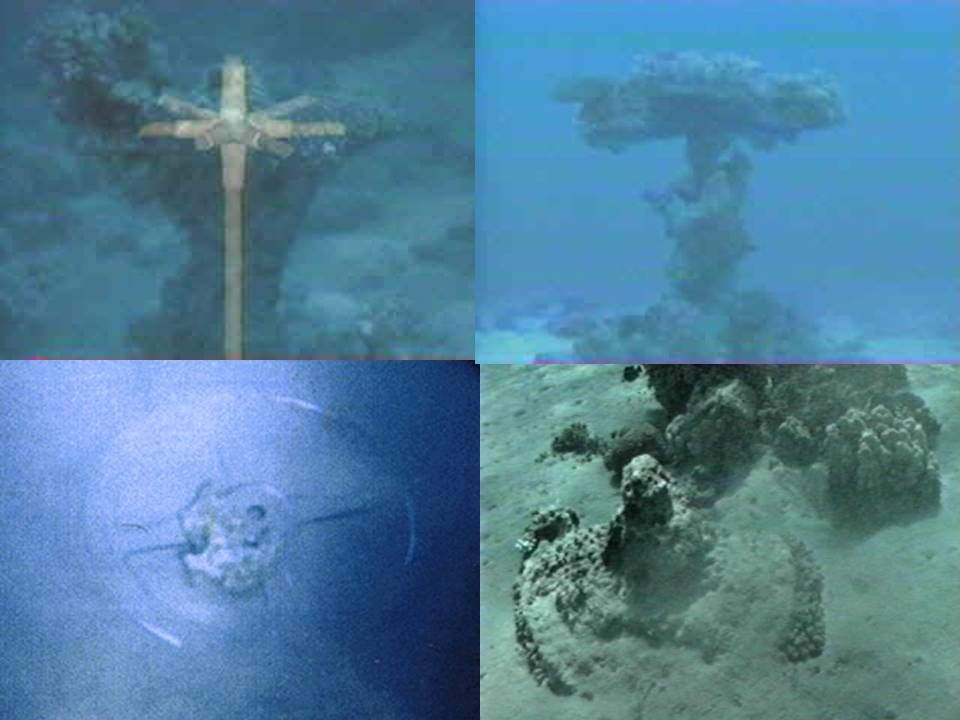
In 1978, explorer Ron Wyatt, alongside his two sons, dove into the Gulf of Aqaba (eastern arm of the Red Sea). What they found has stirred faith and controversy alike: coral formations shaped like chariot wheels, axles, and even the skeletal remains of men and horses. Using metal detectors, Wyatt confirmed traces of iron and rust within these coral structures, pointing to man-made artifacts now frozen in time.
Among the most striking discoveries was an eight-spoked chariot wheel. When presented to Dr. Nassif Mohammed Hassan, Director of Egyptian Antiquities, it was identified as belonging specifically to the 18th Dynasty of Egypt—precisely the period when many Biblical scholars date the Exodus (around 1446 BC). Four-, six-, and eight-spoked wheels—all styles unique to the 18th Dynasty—have been documented on the seafloor.
Even more extraordinary was the discovery of a gold-veneered chariot wheel, likely belonging to Pharaoh himself. While the wooden frame beneath had long decayed, the golden plating remained intact, untouched by coral. Though unretrievable, it was captured on film — a gleaming relic of Egypt’s pride brought low.
Bones in the Deep
At the same site, divers uncovered coral-encrusted skeletal remains. One human femur, tested at Stockholm University, was confirmed to be that of a man about 5’5” to 5’7” tall. Mineralized after 3,500 years under the sea, the bone stands as a silent testimony that real people — not metaphors nor myths — perished in those waters. Real people.
Solomon’s Pillars
Wyatt’s discoveries were not confined to the seabed. On the Egyptian shore of Nuweiba Beach, he found a granite column lying face down, and on the opposite shore in Saudi Arabia, an identical one still upright. The Saudi pillar bore inscriptions in ancient Hebrew containing the names: Mizraim (Egypt), Solomon, Edom, Death, Pharaoh, Moses, Yahweh. Ron Wyatt concluded these were memorial markers erected by King Solomon himself to commemorate God’s miraculous deliverance of Israel.
Today, the Egyptian pillar has been set upright in concrete and is visible to passersby, while the Saudi column has since been removed by local authorities.
A Pillar of Fire and a Melted Shore
The book of Exodus tells us that the Lord led Israel by a pillar of cloud by day and a pillar of fire by night (Exodus 13:20). On the shores of the Red Sea, researchers have discovered a section of melted beach — sand and shells fused together into a concrete-like material, as though scorched by unimaginable heat. Could this be the very spot where the fiery presence of God once stood, shielding His people from Pharaoh’s army?
Academic Support
While critics dismiss these findings as unverified, several scholars and researchers have examined the evidence in depth. In The Exodus Case by Dr. Lennart Möller of the Karolinska Institute (Sweden), Wyatt’s discoveries were analyzed alongside input from six other respected academics, including Egyptologists, marine biologists, and biblical scholars. Their collective work supports the “possibility” that the Red Sea crossing was not merely a story — but true and actual history.
The Silent Testimony
The seabed of Aqaba tells a story—one of wheels and bones, of rust and gold, of pillars erected and beaches melted. All of it pointing back to one defining truth: the Exodus was real. The God of Israel acted with a mighty hand, not in allegory, but in reality.
The coral-covered remains of Pharaoh’s pride still lie beneath the waves, a submerged battlefield echoing the song of Moses:
“The Lord is my strength and my defense; he has become my salvation. He is my God, and I will praise him, my father’s God, and I will exalt him.” ~Exodus 15:2


Leave a comment