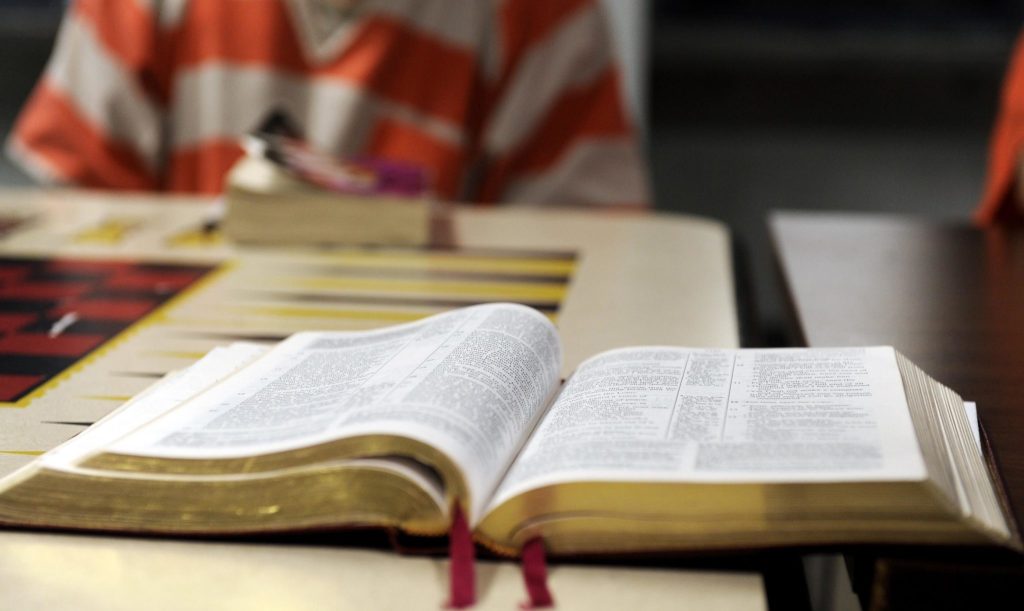
Justice in the Balance
Few topics stir as much debate as the death penalty. Is it justice, or is it cruelty? Is it taking a judicial stand, or simply stooping down to the murderers level? Does it align with God’s heart, or does it contradict the mercy of Christ?
Even within the church, believers are often divided. Yet God’s Word does not shy away from the question of life and death, of justice and mercy.
I used to be unsure of how I felt about capital punishment, finding myself agreeing with arguments on both sides of the topic. So, as with anything in life, the only solution was to pray, and search the Bible.
And after doing so, I believe Scripture makes clear that murder — the deliberate taking of innocent life — demands the ultimate earthly consequence: death.
This isn’t about vengeance; it’s about justice.
But in the same breath, the Bible also shows us that even the condemned are not beyond the reach of God’s mercy.
The Biblical Foundation of Capital Punishment
The very first mention of the death penalty comes not under Moses’ Law, but long before — in the covenant God made with Noah after the flood:
“Whoever sheds human blood, by man shall his blood be shed; for in the image of God He made man.” ~Genesis 9:6, NKJV
This was not just a command for Israel. It was given to Noah — the father of all nations. God declared that murder was such a violation of His image that it required life for life.
Later, in the Law of Moses, this principle was codified in detail. Consider Numbers 35:30–34:
“Whoever kills a person, the murderer shall be put to death on the testimony of witnesses; but one witness is not sufficient…” (v. 30)
“…you shall take no ransom for the life of a murderer who is guilty of death, but he shall surely be put to death.” (v. 31)
“…for blood defiles the land, and no atonement can be made for the land… except by the blood of him who shed it.” (v. 33)
These verses highlight three truths:
1. Justice must be fair. At least two witnesses were required (Deut. 19:15).
2. Justice cannot be bought. No ransom or bribe could excuse murder. No matter how rich, you can not buy your way out of the consequences for your actions.
3. Justice is spiritual. Murder pollutes the land; justice restores holiness. In Deuteronomy 19:11–13, God says plainly:
if someone hates another and lies in wait to kill them, “you shall take him from My altar, that he may die.”
God’s justice demanded the death penalty for intentional murder — not because He delights in death, but because He so values life.
Justice in the New Testament
Some argue that the death penalty is “Old Testament” and abolished in Christ. Yet the New Testament never erases this principle. Instead, it affirms it. Romans 13:1–4 teaches that governing authorities are appointed by God.
Verse 4 says the ruler “does not bear the sword in vain; for he is God’s minister, an avenger to execute wrath on him who practices evil.”
The sword was not symbolic — it was literal power of life and death.
In Acts 25:11, Paul, standing before Roman rulers, declares: “If I am an offender, or have committed anything deserving of death, I do not object to dying.”
He acknowledges that some crimes are worthy of death under God’s justice.
Jesus, in His earthly ministry, showed mercy to sinners (John 8:1–11), but He never overturned God’s standard of justice for murder. He did not come to abolish the Law, but to fulfill it (Matt. 5:17).
The Purpose of the Death Penalty in God’s Law
Why would God demand such a severe consequence?
1. To Protect Life. By valuing it so highly that the taking of it required the ultimate payment.
2. To Preserve Holiness. Bloodshed polluted the land where God dwelt; only just punishment could cleanse it.
3. To Prevent Injustice. Multiple witnesses and clear proof were required so that the innocent would not be wrongly condemned.
God’s justice was never reckless. It was careful, deliberate, and holy.
America’s Death Penalty Today
In the United States, the death penalty is still legal in many states, though others have abolished it. Crimes eligible usually include premeditated or aggravated murder, terrorism, and mass shootings. All require the deliberate planning of taking lives. And safeguards exist — juries, appeals, forensic evidence — though it cannot be denied that our system is imperfect.
This is important to acknowledge: God’s standard is flawless; man’s justice is not. Wrongful convictions have occurred, and there is often debate about fairness and bias. While Christians can support the principle of capital punishment as biblical, we must also advocate for truth, fairness, and integrity in its application. That is the only way to be Christ-like in any matter.
Mercy in the Midst of Judgment
Here is the tension: God demands justice, but He also offers mercy. Even murderers are not beyond His saving hand.
Moses killed an Egyptian and fled into the wilderness — yet God called him to lead His people.
David orchestrated the death of Uriah — yet after repentance, God restored him, and even made him a king.
Paul approved of the stoning of Stephen and persecuted believers — yet God transformed him into an apostle, spreading the Word and legacy of Christ Himself.
If God can redeem these men, then even those on death row are not beyond His grace. Countless prison ministries testify that hardened criminals — even murderers, those that killed with an animalistic tenacity — have come to Christ in their final days.
My Conviction: Justice and Gospel Together
I believe the Bible teaches that murderers deserve death. The death penalty upholds the sanctity of life and God’s justice.
But until that sentence is carried out, those awaiting death should hear of the hope of salvation through Christ. Even as they face earthly judgment, they can find eternal life in the Savior who died in their place.
Justice demands their blood; mercy offers them Christ’s.
Conclusion: Justice and Mercy Come Together at the Cross
At the cross, God’s justice and mercy met. Justice demanded death for sin — and Jesus bore that death. Mercy offered life — and we receive it by faith.
The death penalty remains biblical justice for murder. Yet in every prison cell, on every death row, the Gospel still rings true:
“Christ Jesus came into the world to save sinners” (1 Tim. 1:15).
Justice belongs to the Lord. So does mercy. As His people, we are called to uphold both, no matter how our feelings may want us to dictate otherwise.
We need to get our feelings aligned with God’s law. We cannot truly walk a righteous path with Christ Jesus, until we give him the reigns, acknowledging that, in everything, He knows better than we do.


Leave a comment